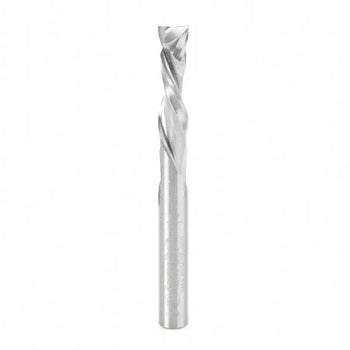
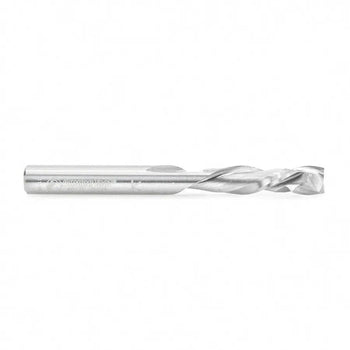
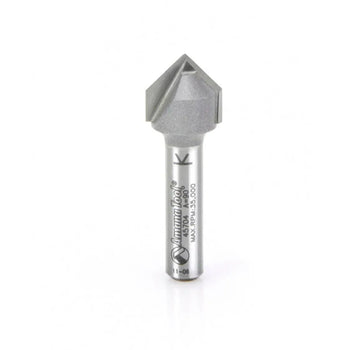
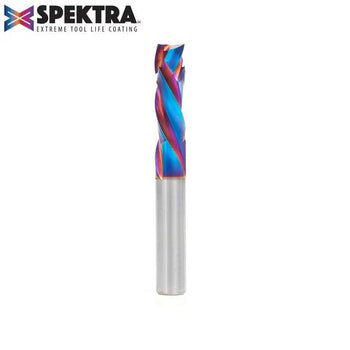
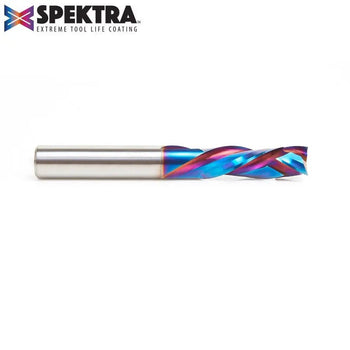
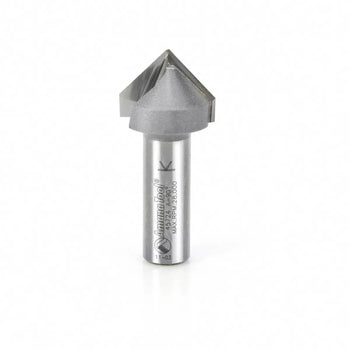
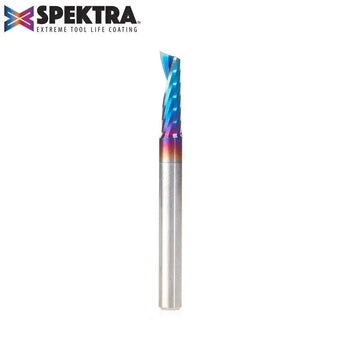
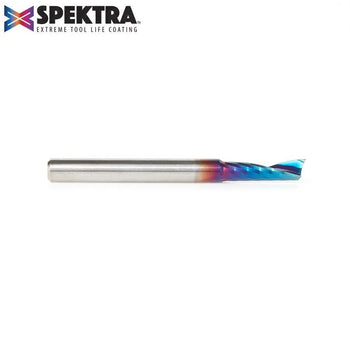
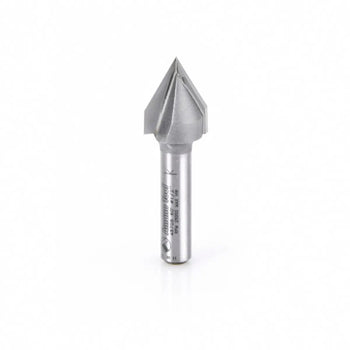
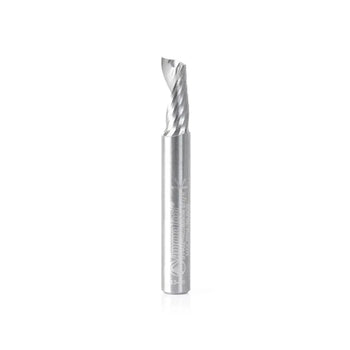
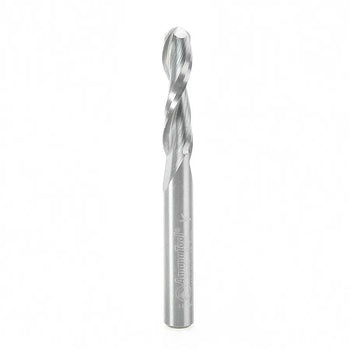
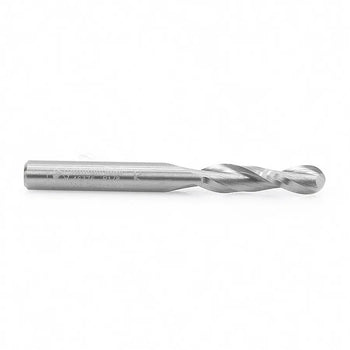
High-Shear 2D & 3D CNC Carving Bit with Spektra™ Coating
Engineered for precision 2D and 3D CNC profiling in wood and plastic, this high-shear, flat-bottom carving bit delivers smooth contours with reduced stepping.
The advanced Spektra™ coating improves wear resistance, maintains sharper cutting edges, reduces friction, and minimizes heat buildup for longer tool life and consistent performance.
Precision-balanced for smooth, high-speed operation up to 60,000 RPM, proper chip load and feed rate adjustments are recommended due to the tool’s small diameter. A directed air blast is also advised to help clear chips, reduce heat, and extend tool life.
Applications
- 3D carving and sculpting
- Large-scale 2D & 3D profiling
- Deep profiling applications
- Dimensional signage
- 3D millwork
- Contouring, modeling, and pattern making
- Cabinetry, furniture, and sign production
- Jewelry mold making
- EPS foam and other abrasive materials
Specifications
Cut Diameter: 1/16"
Shank: 1/4"
Cut Length: 5/16"
Overall Length: 2"
Flute Type: Up-Cut Spiral
No. of Flutes: 3
Excellent for cutting:
Acrylonitrile-Butadiene-Styrene (ABS)
Acrylic
Acrylic Stone
Composite
Corian
Cork
Coroplast®*
Dibond®
Ethafoam***
Ethylene-vinyl Acetate Foam (EVA)
Expanded Polypropylene (EPP)**
Expanded Polystyrene Foam (EPS)
Extruded Polystyrene Foam (XPS)
Fiberglass
Fiberglass PCB Board
Foam Board
Graphite
High Density Polyethylene (HDPE)
High Density Urethane (HDU)
20lbs High Density Urethane
Ice
Lexan™
MDF/HDF
PALFOAM™
Phenolics
Phenolic Composites
Plastics
Poly (methyl methacrylate) (PMMA)
Polyethylene Foam***
Polylam***
Polyurethane Foam
PVC
PVC Foam Board
Sign Board
Sign Foam
Tooling Board
Wood
XPE (Cross Linked Polyethylene) Foam
*A soft plastic cardboard made with super soft, super flexible PVC.
**Expanded polypropylene (EPP) is a foam form of polypropylene.
***Ethafoam, Polyethylene, and Polylam are durable, flexible, closed-cell foams with excellent memory.
Our Spektra™ bits feature a nACo® nanocomposite coating with an extreme nanohardness and heat resistance. With a brilliant distinctively-tinted coloring nACo provides additional improvements in four critical aspects of router tooling.
- nACo coating is a micro-thin ceramic coating which enables the tool's cutting edge to retain crucial sharpness and lubricity. This provides longevity and produces cutting results of the highest quality.
- Coating prevents high heat and oxidation which is detrimental to cutting tool performance.
- Multi-colored hues, while attractive, will dissipate upon use and yet coating will remain fully effective.
- nACo offers approximately 4,500 Vickers for impressive solid hardness on cutting areas of the tool, for an increase up to 2.5 times compared to uncoated bits.
Note: Blue based color dissipates immediately upon use. nACo® nanocomposite coating will not wear off.
Milling Plastics:
In a milling application, all plastics tend to behave differently so attention must be paid first and foremost to heat input, as that greatly impacts surface finish and chip control.
Suggested starting spindle speed might be 18,000 RPM, there needs to be some experimenting on the part of the programmer to best find an acceptable finish.
High-Shear 2D & 3D CNC Carving Bit with Spektra™ Coating
Engineered for precision 2D and 3D CNC profiling in wood and plastic, this high-shear, flat-bottom carving bit delivers smooth contours with reduced stepping.
The advanced Spektra™ coating improves wear resistance, maintains sharper cutting edges, reduces friction, and minimizes heat buildup for longer tool life and consistent performance.
Precision-balanced for smooth, high-speed operation up to 60,000 RPM, proper chip load and feed rate adjustments are recommended due to the tool’s small diameter. A directed air blast is also advised to help clear chips, reduce heat, and extend tool life.
Applications
- 3D carving and sculpting
- Large-scale 2D & 3D profiling
- Deep profiling applications
- Dimensional signage
- 3D millwork
- Contouring, modeling, and pattern making
- Cabinetry, furniture, and sign production
- Jewelry mold making
- EPS foam and other abrasive materials
Specifications
Cut Diameter: 1/16"
Shank: 1/4"
Cut Length: 5/16"
Overall Length: 2"
Flute Type: Up-Cut Spiral
No. of Flutes: 3
Excellent for cutting:
Acrylonitrile-Butadiene-Styrene (ABS)
Acrylic
Acrylic Stone
Composite
Corian
Cork
Coroplast®*
Dibond®
Ethafoam***
Ethylene-vinyl Acetate Foam (EVA)
Expanded Polypropylene (EPP)**
Expanded Polystyrene Foam (EPS)
Extruded Polystyrene Foam (XPS)
Fiberglass
Fiberglass PCB Board
Foam Board
Graphite
High Density Polyethylene (HDPE)
High Density Urethane (HDU)
20lbs High Density Urethane
Ice
Lexan™
MDF/HDF
PALFOAM™
Phenolics
Phenolic Composites
Plastics
Poly (methyl methacrylate) (PMMA)
Polyethylene Foam***
Polylam***
Polyurethane Foam
PVC
PVC Foam Board
Sign Board
Sign Foam
Tooling Board
Wood
XPE (Cross Linked Polyethylene) Foam
*A soft plastic cardboard made with super soft, super flexible PVC.
**Expanded polypropylene (EPP) is a foam form of polypropylene.
***Ethafoam, Polyethylene, and Polylam are durable, flexible, closed-cell foams with excellent memory.
Our Spektra™ bits feature a nACo® nanocomposite coating with an extreme nanohardness and heat resistance. With a brilliant distinctively-tinted coloring nACo provides additional improvements in four critical aspects of router tooling.
- nACo coating is a micro-thin ceramic coating which enables the tool's cutting edge to retain crucial sharpness and lubricity. This provides longevity and produces cutting results of the highest quality.
- Coating prevents high heat and oxidation which is detrimental to cutting tool performance.
- Multi-colored hues, while attractive, will dissipate upon use and yet coating will remain fully effective.
- nACo offers approximately 4,500 Vickers for impressive solid hardness on cutting areas of the tool, for an increase up to 2.5 times compared to uncoated bits.
Note: Blue based color dissipates immediately upon use. nACo® nanocomposite coating will not wear off.
Milling Plastics:
In a milling application, all plastics tend to behave differently so attention must be paid first and foremost to heat input, as that greatly impacts surface finish and chip control.
Suggested starting spindle speed might be 18,000 RPM, there needs to be some experimenting on the part of the programmer to best find an acceptable finish.